Want to join the Club?

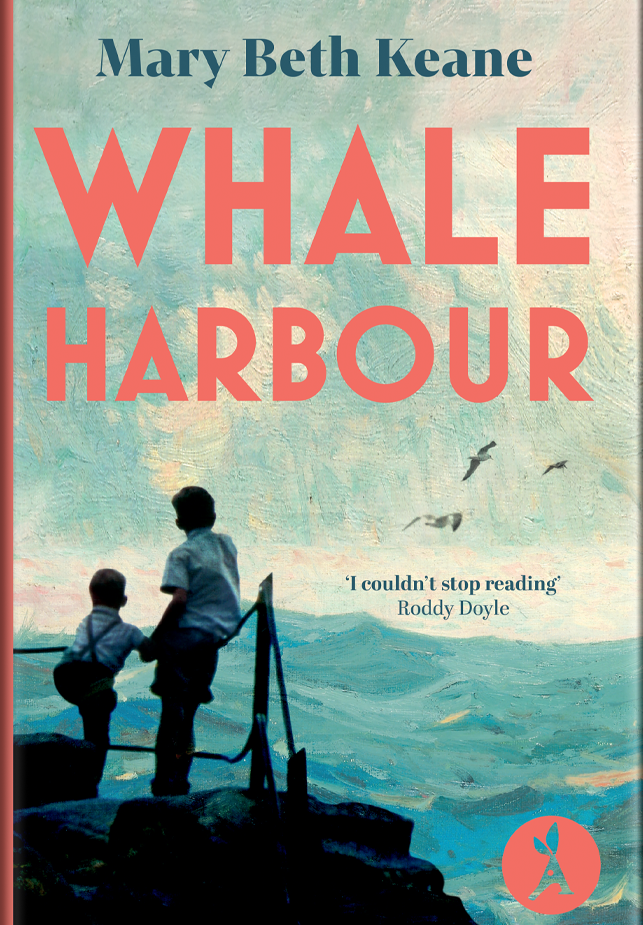
Whale Harbour

Mary Beth Keane

Literary Fiction
Historical Fiction

At a glance

⏳
Spans decades
👪
Complicated family dynamics
🧮
11 sons
💬
Character-driven

An immersive multi-generational family story from the beloved and bestselling author of Ask Again, Yes.

Connemara, Ireland, 1963. Sixteen-year-old Macdara and his brothers are aware from a young age that they must one day leave their small fishing village to make their way in the world. But that time comes sooner than expected in the wake of a sudden tragedy, when their father makes choices for his eleven grieving sons. The older boys will emigrate to England for work, while the younger ones will stay at home.

‍

Macdara, the second eldest, is offered a job on a Montana cattle ranch and prepares to set off. His spirited younger brother Rian begs to go with him, and Mac promises to bring Rian to America as soon as he’s old enough.

Mac embarks upon his new life, trying not to think about all he has left behind. And then one day he receives a call to say that Rian has disappeared. The weight of his unkept promise will haunt Mac through the years, as he and the older brothers move to New York to build lives and families of their own. It will take a new generation to confront the mystery of Rian’s absence and seek to reunite them all.

‍

Spanning decades and continents, Whale Harbour is a warm, immersive and unforgettable novel that explores the emotional resonance of family and the depths of the human heart.

Don’t just take
our word for it

“The author of Ask Again, Yes is back with another stunner.... period details are sprinkled in with a wonderfully light touch… As this band of brothers faces all that fate sends their way, the plot moves towards a surprisingly action-packed and perfectly seeded climax... Keane's magic touch is so effective that the question of what is real and what is not never even enters our minds. It’s all as real as words on paper can ever be.”

- Marion Winik, Boston Globe

“With all the cadence and lyricism of an Irish ballad, Keane’s prose and dialogue sparkle with lightness, wit, and authenticity. Brimming with emotion, this charming yet psychologically complex family shines with tenderness, care, and loyalty. Keane’s characters express joy, wonder, and genuine love even as they grapple with hardship, grief, and loss.”

- Booklist, starred review 🌟

“Keane’s outstanding ability to encompass family feeling in fluid, translucent prose—as she did in Ask Again, Yes—shines once more in this saga of immigration and lifelong emotional bonds. Epic yet intimate, with a long, satisfying afterecho.”

- Kirkus, starred review 🌟

Get a taste

“Macdara,” came a whisper, hot breath near Mac’s ear. “Dúisigh!”

‍

It was morning. A bell in the distance. Mac’s body felt stiff, and he could tell by the light that it was later than he usually slept. Rian’s spot under the blanket was cold so he must have been up for a while. Prowling, no doubt. Exploring. Blackguarding, if such a thing as possible on the top of a mountain. If anyone could find trouble, Rian could. Down at the shore the tide would have pushed great knots of seaweed onto the beach and Mac and Rian’s brothers would have been sent to collect it. It was mid-May already. Fair Day was coming up soon and if Mac could figure a way there he’d have a great time, but his bicycle had been broken for weeks.

‍

“Say it in English,” Mac mumbled to his younger brother. He didn’t want to move just yet—he needed a moment—but in those seconds he could feel the heat of Rian’s breath near his face again.

‍

“Dúisigh,” Rian repeated as he shook his brother’s shoulder. It was just the two of them up in the booley house where their mother had slept during summers when she was a girl, back when cattle were driven into the mountains for the seasonal burst of grass. The booley had been neglected for a generation because no one kept more than a few head of cattle any more, at least not in the Cuan where they were locked between mountains and sea and the only crop that appeared from the soil in abundance were stones. But as a young girl, their mother had stayed up in the booley for a few weeks each summer along with her mother, and her aunts, and all the other womenfolk in other booleys scattered over the mountains because the men couldn’t leave the sea. The small shelter had a packed dirt floor and a ring of stones marking the place to make a fire. The walls were just stands of carefully stacked bog oak built against one of the boulders that made up the landscape of wider Connemara and that Teacher said were all put there by a glacier, somehow. Outside, a battered ash tree gave some protection from the wind.

‍

Rian gave up on Mac and stepped outside. Mac could hear him scrambling in the bush.

Want to join the Club?

Book notes

  • 🙋‍♀️ Why we chose

    Whale Harbour is an immigration story that reads like an epic; at once sweeping and specific, it offers little slice-of-life moments alongside a grand intergenerational saga of love, family, and belonging. 

    The novel offers compelling reflections on language, culture, and experience: how the way you grew up might influence who you are, or “how the way you speak might impact the way a person thought.” For example: in English, you say you’re happy or sad, whereas in Irish, the translation is more like “sadness is upon me.” As a benevolent anthropologist explains, “In Irish you don’t entirely become that emotion…Americans talk about happy as if it’s a country, like it’s a place you can go and decide to stay. But it’s only a feeling. It comes and goes like all feelings.”

    Whale Harbour is the gorgeous, gripping story of eleven brothers and their divergent paths: from emigrating to England to moving to America, to one of them disappearing and haunting the family for generations to come. It also considers the paths not taken, the agony of potentiality; Macdara reflects, after moving to Montana to work on a cattle ranch, what it might have been like to remain in Ireland. “Somewhere in his mind, that life existed alongside this one…Was that his real life? Or was this? Or was real life still in the future?”

  • ⚠️ Content warnings

    Domestic abuse, allusions to CSA.